We have compiled a list of manufacturers, distributors, product information, reference prices, and rankings for Diffraction Equipment.
ipros is IPROS GMS IPROS One of the largest technical database sites in Japan that collects information on.

Diffraction Equipment Product List and Ranking from 9 Manufacturers, Suppliers and Companies | IPROS GMS

Last Updated: Aggregation Period:Feb 18, 2026~Mar 17, 2026
This ranking is based on the number of page views on our site.

Diffraction Equipment Manufacturer, Suppliers and Company Rankings

Last Updated: Aggregation Period:Feb 18, 2026~Mar 17, 2026
This ranking is based on the number of page views on our site.

  1. スペクトリス株式会社 マルバーン・パナリティカル事業部 Hyogo//Testing, Analysis and Measurement
  2. サーモフィッシャーサイエンティフィック株式会社/Thermo Fisher Scientific K.K. Tokyo//Testing, Analysis and Measurement
  3. 大同分析リサーチ Aichi//Service Industry
  4. 4 一般財団法人材料科学技術振興財団 MST Tokyo//Testing, Analysis and Measurement
  5. 4 null/null

Diffraction Equipment Product ranking

Last Updated: Aggregation Period:Feb 18, 2026~Mar 17, 2026
This ranking is based on the number of page views on our site.

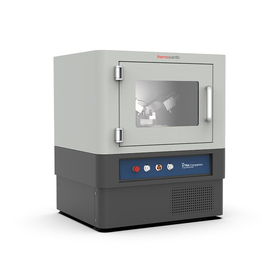
  1. ARL X’TRA Companion X-ray Diffraction Device (XRD) サーモフィッシャーサイエンティフィック株式会社/Thermo Fisher Scientific K.K.
  2. Multipurpose X-ray diffraction device Empyrean スペクトリス株式会社 マルバーン・パナリティカル事業部
  3. EBSD main analysis method 大同分析リサーチ
  4. Tabletop X-ray diffractometer (XRD) Aeris スペクトリス株式会社 マルバーン・パナリティカル事業部
  5. Crystal analysis using EBSD (Electron Backscatter Diffraction)

Diffraction Equipment Product List

1~30 item / All 30 items

Displayed results

ARL X’TRA Companion X-ray Diffraction Device (XRD)

A tabletop X-ray diffractometer (XRD) with high precision and high reproducibility that strongly supports quality control and research and development.

The ARL X'TRA Companion X-ray Diffraction Device (XRD) is a cost-effective solution ideal for routine QC/QA in industrial laboratories. It is a robust and high-precision tabletop X-ray diffraction device that pursues accuracy, safety, and operability by incorporating advanced technology, making it perfect for everyday analytical tasks. - High-performance, high-precision θ/θ Bragg–Brentano type X-ray diffraction device (XRD) - An optimized tabletop analytical solution that achieves excellent phase identification, phase quantification, and crystallinity evaluation, suitable for quality control and research applications - High-speed, high-quality data acquisition enabled by advanced solid-state pixel detectors and high energy resolution - One-click Rietveld analysis (quantitative analysis) for excellent operability and efficiency - Standard features include a shielded cabinet and interlock mechanism for safety considerations - An all-around XRD device that caters to a wide range of applications, from educational purposes to process management

Added to bookmarks

Bookmarks list

Bookmark has been removed

Bookmarks list

You can't add any more bookmarks

By registering as a member, you can increase the number of bookmarks you can save and organize them with labels.

Free membership registration

Multipurpose X-ray diffraction device Empyrean

From development to quality control! A super high-performance X-ray diffractometer that enables various forms of sample analysis.

The newly developed MultiCore Optics, equipped in the multipurpose X-ray diffraction device Empyrean, enables easy measurement of diverse samples with simple operations. With just one device, it features multipurpose XRD capabilities that capture various highlights of materials from powders to thin films, nanomaterials to solids, at different angles! Applications can be handled in various ways, from a simple configuration that adds a few slits and analysis software to the standard setup, to a top-performance configuration using dedicated optics, light sources, and detectors. 【Features】 ■ Evaluation of products with different raw materials and formulations ■ Strong support for urgent analysis of unknown samples or development products ■ Suitable for efficient measurement of diverse samples ■ Easy operation ■ Over 30% improvement in sample throughput ■ Over 40% higher sensitivity and speed for impurity detection ■ Reduction of errors and omissions in setting multiple measurement conditions ■ 30% reduction in user training time *For more details, please refer to our website.

  • Analytical Equipment and Devices
  • X-ray inspection equipment
  • Diffraction Equipment

Added to bookmarks

Bookmarks list

Bookmark has been removed

Bookmarks list

You can't add any more bookmarks

By registering as a member, you can increase the number of bookmarks you can save and organize them with labels.

Free membership registration

High-Pressure Reflection High-Energy Electron Diffraction (RHEED)

Regulating thin film growth! Providing diagnostic tools for real-time process monitoring.

"High-Pressure Reflection High-Energy Electron Diffraction (RHEED)" is high-pressure reflection high-energy electron diffraction. It provides a diagnostic tool for real-time in-situ process monitoring for PLD/PED systems. It adjusts thin film growth based on structural data from intensity and diffraction. 【Features】 ■ Adjusts thin film growth based on structural data from intensity and diffraction. *For more details, please refer to the PDF document or feel free to contact us.

  • Other energy equipment
  • Diffraction Equipment

Added to bookmarks

Bookmarks list

Bookmark has been removed

Bookmarks list

You can't add any more bookmarks

By registering as a member, you can increase the number of bookmarks you can save and organize them with labels.

Free membership registration

X-ray diffraction method

XRD is a method for obtaining information about the crystal structure of a sample from its diffraction pattern.

- Identification of crystalline substances is possible - Evaluation of crystal size (from a few nm to 100 nm) is possible - Evaluation of crystallinity is possible - Evaluation of orientation is possible - Evaluation of strain and stress is possible - Non-destructive analysis is possible Features of the equipment - Heating analysis is possible from room temperature to 1100°C - Micro-area measurement with a beam diameter of up to 100 μm is possible - Atmosphere control is possible with N2, He, Ar, and vacuum

  • 打ち合わせ.jpg
  • セミナー.jpg
  • Contract Analysis
  • Contract measurement
  • Contract Inspection
  • Diffraction Equipment

Added to bookmarks

Bookmarks list

Bookmark has been removed

Bookmarks list

You can't add any more bookmarks

By registering as a member, you can increase the number of bookmarks you can save and organize them with labels.

Free membership registration

[Analysis Case] IGZO

Case studies of XRD and XRR analysis of oxide semiconductors.

The transparent oxide semiconductor IGZO thin film is being researched and developed as a TFT material for displays. IGZO is a material whose properties change significantly based on the composition of the film, the presence of oxygen vacancies, and crystallinity, making it important to consider the correlation with film quality. We will introduce a case where the crystallinity, film thickness, and film density of three types of IGZO thin films with different heating temperatures were measured and compared using XRD and XRR. It was confirmed non-destructively that crystallization progresses at high temperatures, resulting in higher film density.

  • Contract Analysis
  • Contract Inspection
  • Diffraction Equipment

Added to bookmarks

Bookmarks list

Bookmark has been removed

Bookmarks list

You can't add any more bookmarks

By registering as a member, you can increase the number of bookmarks you can save and organize them with labels.

Free membership registration

[Analysis Case] Evaluation of Metal Films by High-Temperature XRD

Tracking evaluation of phase transitions and crystallinity changes during the heating process.

For the sample where Pt was sputter-deposited on a Si substrate, Out-of-plane XRD and In-plane XRD measurements were conducted while increasing the temperature. In both measurements, it was observed that the peak intensity of Pt(111) increased and the full width at half maximum decreased at temperatures above 500°C, indicating that crystallization was progressing. Additionally, it was confirmed that as the temperature rose, thermal expansion caused the peaks to shift towards lower angles (the direction of increased lattice spacing).

  • Contract Analysis
  • Diffraction Equipment

Added to bookmarks

Bookmarks list

Bookmark has been removed

Bookmarks list

You can't add any more bookmarks

By registering as a member, you can increase the number of bookmarks you can save and organize them with labels.

Free membership registration

Types and Characteristics of Electron Diffraction

TEM: Transmission Electron Microscopy

The electron diffraction method using an electron microscope is classified into three types based on the way the electron beam is incident on the sample. The characteristics of each type and examples of data are presented. It is necessary to choose the appropriate method according to the size of the evaluation object and the analysis purpose.

  • Contract Analysis
  • Diffraction Equipment

Added to bookmarks

Bookmarks list

Bookmark has been removed

Bookmarks list

You can't add any more bookmarks

By registering as a member, you can increase the number of bookmarks you can save and organize them with labels.

Free membership registration

[Data DL available/EBSD] Measurement of internal strain in wire materials

By confirming the shape changes of the metal structure and measuring internal strain using EBSD, it is possible to determine whether the bending processes of leaf springs, hair springs, and others are appropriate.

Electron Backscatter Diffraction Pattern (EBSD) allows for the following when combined with a Scanning Electron Microscope (SEM): - Analysis of crystal orientation after cross-section formation - Confirmation of shape changes in metal microstructures and internal strain distribution In this case, we introduce "internal strain measurement of wire materials" using EBSD. This measurement technique is useful for determining whether bending processes, such as those for leaf springs and hair springs, are appropriate and for setting processing conditions. We encourage you to give it a try. Additionally, our company conducts various cross-sectional analyses using TEM and surface analysis using XPS, enabling multifaceted analytical evaluations. Both sales and technical staff are available to assist directly, so we would be grateful if you could feel free to consult with us. Seiko Future Creation Official Website https://www.seiko-sfc.co.jp/

  • Other metal materials
  • Contract measurement
  • Other microscopes
  • Diffraction Equipment

Added to bookmarks

Bookmarks list

Bookmark has been removed

Bookmarks list

You can't add any more bookmarks

By registering as a member, you can increase the number of bookmarks you can save and organize them with labels.

Free membership registration

Evaluation of crystallinity of ultra-thin films by high-temperature XRD.

An effective means to understand phase changes, chemical reactions, and changes in lattice constants due to temperature conditions!

We would like to introduce our "Evaluation of Crystallinity of Ultra-Thin Films using High-Temperature XRD." High-temperature X-ray diffraction (XRD) is an effective method for understanding phase changes, chemical reactions, and changes in lattice constants of various materials under different temperature conditions. In the attached PDF document, we present a case study evaluating the changes in the crystal structure of nm-order ultra-thin films using In-Plane XRD and high-temperature measurements, so please take a look. 【Features of High-Temperature + In-Plane XRD】 ■ A method that involves incident X-rays at very low angles and scans the detector in the in-plane direction ■ The incident X-rays do not penetrate deeply from the surface and can only detect diffraction planes that are perpendicular to the surface ■ Information about crystals can be obtained even for ultra-thin films of a few nm *For more details, please download the PDF or feel free to contact us.

  • Other analysis and evaluation services
  • Diffraction Equipment

Added to bookmarks

Bookmarks list

Bookmark has been removed

Bookmarks list

You can't add any more bookmarks

By registering as a member, you can increase the number of bookmarks you can save and organize them with labels.

Free membership registration

Quantitative analysis of X-ray diffraction data using Rietveld refinement.

For applications such as evaluating the particle size and strain of positive/negative electrode materials in the charge and discharge process of secondary batteries!

We would like to introduce our "Quantitative Analysis of X-ray Diffraction Data Using Rietveld Analysis." By applying Rietveld analysis to X-ray diffraction data, it is possible to quantify the mass fraction of crystalline phases, crystallite size, and uniform strain in the sample without the need for standard samples. Please feel free to contact us if you have any inquiries. 【Features】 ■ Quantification of the mass fraction of crystalline phases, crystallite size, and uniform strain in the sample without the need for standard samples. *For more details, please download the PDF or feel free to contact us.

  • Other analysis and evaluation services
  • Diffraction Equipment

Added to bookmarks

Bookmarks list

Bookmark has been removed

Bookmarks list

You can't add any more bookmarks

By registering as a member, you can increase the number of bookmarks you can save and organize them with labels.

Free membership registration

Thin Film X-ray Diffraction (XRD)

It is possible to evaluate the crystallinity of thin films using In-Plane XRD and measure the physical properties of thin films using XRR!

We would like to introduce our "Thin Film X-ray Diffraction (XRD)." In addition to identifying the crystal structure of thin films at the nanometer level, we can also analyze the film density, thickness, and roughness of multilayer films through X-ray reflectivity measurements. By incidenting X-rays with good parallelism at a very shallow angle to the sample, we can achieve an extremely shallow penetration depth of the X-rays, allowing for the evaluation of thin film crystallinity using In-Plane XRD and the measurement of thin film physical properties using XRR. 【Features】 ■ In-Plane XRD (In-Plane Rotation Measurement) Evaluation of crystalline thin films at the nanometer level ■ XRR (X-ray Reflectivity Measurement) Evaluation of film density, thickness, and (surface/interface) roughness ■ Support for general thin film methods (fixed θ 2θ scanning) *For more details, please download the PDF or feel free to contact us.

  • Contract Analysis
  • Diffraction Equipment

Added to bookmarks

Bookmarks list

Bookmark has been removed

Bookmarks list

You can't add any more bookmarks

By registering as a member, you can increase the number of bookmarks you can save and organize them with labels.

Free membership registration

EBSD main analysis method

EBSD allows for the evaluation of the crystal structure and crystal orientation of materials.

Our company is capable of EBSD analysis using appropriate methods according to the research objectives.

  • Contract Analysis
  • Diffraction Equipment

Added to bookmarks

Bookmarks list

Bookmark has been removed

Bookmarks list

You can't add any more bookmarks

By registering as a member, you can increase the number of bookmarks you can save and organize them with labels.

Free membership registration

Tabletop X-ray diffractometer (XRD) Aeris

【2021 Introduction of Transmission Measurement and Thin Film Measurement Options】 Desktop X-ray Diffraction Device (XRD)! A high-sensitivity analysis instrument capable of detecting crystal phases at concentrations below 1%.

Spectris plc's Malvern Panalytical division has launched a significantly upgraded model of the benchtop powder X-ray diffractometer, Aeris. With the expanded capabilities for thin film XRD (GIXRD) measurements, it is now possible to measure the crystallinity and residual stress of thin films and coating materials. Additionally, the enhancement of the transmittance measurement function reduces the influence of orientation during sample preparation, allowing for more accurate data even from samples like formulation materials. This renewal has enabled the incorporation of functions that were previously only available on large floor-standing systems. The new Aeris is a versatile benchtop X-ray diffractometer that can efficiently provide high-quality data from polycrystalline materials and is designed for use in all environments. Moreover, the user-friendly operability, the safe design that alleviates concerns about X-ray exposure, and the same analysis software capable of detailed analysis as the large floor-standing systems, which were well-regarded in the previous Aeris, have been thoroughly carried over in this renewal. For detailed product descriptions, measurement case studies, or requests for quotes, please feel free to contact us!

  • Analytical Equipment and Devices
  • X-ray inspection equipment
  • Diffraction Equipment

Added to bookmarks

Bookmarks list

Bookmark has been removed

Bookmarks list

You can't add any more bookmarks

By registering as a member, you can increase the number of bookmarks you can save and organize them with labels.

Free membership registration

[EBSD] Electron Backscatter Diffraction Method

It is possible to easily obtain crystal information over a wide area.

This is a method for orientation analysis of crystalline samples using EBSD. It allows for easier and broader acquisition of crystal information compared to electron diffraction methods. EBSP: Electron Backscatter Pattern, also referred to as SEM-OIM or OIM. - Measurement of the surface orientation of single crystal grains is possible. - Orientation measurement of the measurement area is possible. - Observation of crystal grain size is possible. - Observation of twin grain boundaries (corresponding grain boundaries) is possible. - Extraction of specific crystal orientations is possible. - Measurement of the rotation angle of adjacent crystal grains is possible. - Evaluation of grains larger than 10 nm is possible using transmission methods.

  • 打ち合わせ.jpg
  • セミナー.jpg
  • Contract Analysis
  • Contract measurement
  • Contract Inspection
  • Diffraction Equipment

Added to bookmarks

Bookmarks list

Bookmark has been removed

Bookmarks list

You can't add any more bookmarks

By registering as a member, you can increase the number of bookmarks you can save and organize them with labels.

Free membership registration

[ED] Electron Diffraction Method

ED is a method for investigating crystal structures from diffraction patterns obtained by irradiating a sample with an electron beam.

ED is a method for investigating crystal structures from diffraction patterns obtained by irradiating a sample with an electron beam. - Crystallographic information about the material can be obtained. In the case of a transmission electron microscope, a single crystal shows regularly arranged diffraction spots, a polycrystal shows concentric circular rings, and an amorphous material shows broad circular electron diffraction patterns. - It is possible to examine the crystal structure of small regions observed with a transmission electron microscope. - By combining the crystal structure with elemental analysis results from the EDX method, it is also possible to identify materials that possess crystallinity.

  • 打ち合わせ.jpg
  • セミナー.jpg
  • Contract Analysis
  • Contract measurement
  • Contract Inspection
  • Diffraction Equipment

Added to bookmarks

Bookmarks list

Bookmark has been removed

Bookmarks list

You can't add any more bookmarks

By registering as a member, you can increase the number of bookmarks you can save and organize them with labels.

Free membership registration

[Analysis Case] Local Crystal Structure Analysis of IGZO Film

Continuous evaluation of crystallinity and orientation using electron diffraction.

IGZO films are materials that are being researched and developed as TFT materials for displays. The presence or absence of crystalline structure in the thin film may affect the TFT characteristics and reliability, necessitating local crystalline evaluation within the device. We will introduce a case where the crystalline structure in IGZO films was continuously evaluated using electron diffraction measurements from TEM.

  • Contract Analysis
  • Contract Inspection
  • Diffraction Equipment

Added to bookmarks

Bookmarks list

Bookmark has been removed

Bookmarks list

You can't add any more bookmarks

By registering as a member, you can increase the number of bookmarks you can save and organize them with labels.

Free membership registration

[Analysis Case] Measurement of Residual Stress in Metal Materials Before and After Load Application Using XRD

It is possible to quantitatively measure tensile and compressive stress non-destructively.

Residual stress measurement is one of the important methods to investigate whether a component can withstand various stress conditions. In XRD (X-ray diffraction), it is possible to determine residual stress by measuring the lattice spacing. This document introduces a case where a sample of aluminum plates with V-shaped processing on both sides was created for tensile testing, and a comparison of residual stress before and after applying tensile load using a tensile testing device, as well as the distribution of residual stress in the sample after application, was confirmed. The residual stress values were determined using the sin²ψ method. For more details, please download the document or contact us.

  • Contract Analysis
  • Diffraction Equipment

Added to bookmarks

Bookmarks list

Bookmark has been removed

Bookmarks list

You can't add any more bookmarks

By registering as a member, you can increase the number of bookmarks you can save and organize them with labels.

Free membership registration

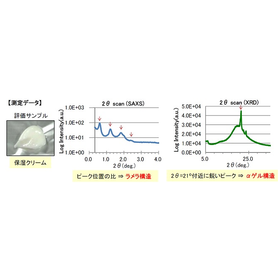
[Analysis Case] Evaluation of Hierarchical Structure of Polymer Materials Using X-ray Diffraction and Scattering Techniques

Structural analysis of lamellae and similar structures is possible! Similar evaluations can be performed using WAXS (Wide-Angle X-ray Scattering).

Our organization conducts evaluations of the hierarchical structure of polymer materials using X-ray diffraction and scattering techniques. It is known that the differences in higher-order structures created by amphiphilic substances affect the moisturizing and permeability properties of skin tissue, making it important to understand these structures in order to evaluate the functionality of the materials. We will introduce examples of evaluating the hierarchical structure of polymers using XRD (X-ray diffraction) for structures on the order of a few nanometers and SAXS (small-angle X-ray scattering) for structures on the order of several tens of nanometers. 【Measurement and Processing Methods】 ■ [XRD] X-ray Diffraction ■ [SAXS] Small-Angle X-ray Scattering *For more details, please download the PDF or feel free to contact us.

  • 1.png
  • Contract Analysis
  • Diffraction Equipment

Added to bookmarks

Bookmarks list

Bookmark has been removed

Bookmarks list

You can't add any more bookmarks

By registering as a member, you can increase the number of bookmarks you can save and organize them with labels.

Free membership registration

Observation of the metal structure of wire (spring material) using DL/EBSD.

Observing metal microstructures with EBSD allows for smooth consideration of material selection and changes.

Electron Backscatter Diffraction Pattern (EBSD) allows for the following when combined with a Scanning Electron Microscope (SEM): - Separation of phases with different crystal systems - Distribution ratio and crystal orientation analysis for each separated phase In this case, we introduce "metal microstructure observation of wire (spring material) using EBSD." We investigated the changes in metal microstructure during the processing of spring material (drawing with a diameter of Φ1.00mm and 0.07mm) and confirmed that the metal microstructure changes after drawing. This measurement technique is very useful for selecting metal materials and comparing during material changes. We encourage you to give it a try. Additionally, our company conducts various cross-sectional analyses using TEM and surface analysis using XPS, allowing for multifaceted analytical assessments. Both sales and technical staff are available to assist directly, so please feel free to consult with us. Seiko Future Creation Official Website https://www.seiko-sfc.co.jp/

  • Other metal materials
  • Contract measurement
  • Other microscopes
  • Diffraction Equipment

Added to bookmarks

Bookmarks list

Bookmark has been removed

Bookmarks list

You can't add any more bookmarks

By registering as a member, you can increase the number of bookmarks you can save and organize them with labels.

Free membership registration

[Data Download Available/EBSD] Evaluation of Aluminum Sputter Films Using EBSD

The electron backscatter diffraction method (EBSD) is useful for evaluating the performance of aluminum sputter films and selecting substrate materials.

Electron Backscatter Diffraction Pattern (EBSD) can be combined with Scanning Electron Microscopy (SEM) to enable the following: ● Measurement of the shape and orientation of micro-regions of crystal grains ● Confirmation of the orientation of crystals relative to a reference orientation ● Measurement of internal strain in materials from information on crystal orientation differences In this case, we introduce "Evaluation of Aluminum Sputter Films Using EBSD." This measurement technique is useful for evaluating the performance of aluminum sputter films and for substrate selection. It can also be applied to ceramic materials if there is orientation evaluation and crystallinity. We encourage you to give it a try. In addition to EBSD and SEM, our company also conducts various cross-sectional analyses using TEM and surface analysis using XPS, allowing for multifaceted analytical evaluations. Both sales and technical staff are available to assist directly, so we would appreciate it if you could feel free to consult with us. Seiko Future Creation Official Website https://www.seiko-sfc.co.jp/

  • Other metal materials
  • Sputtering Equipment
  • Ceramics
  • Diffraction Equipment

Added to bookmarks

Bookmarks list

Bookmark has been removed

Bookmarks list

You can't add any more bookmarks

By registering as a member, you can increase the number of bookmarks you can save and organize them with labels.

Free membership registration

Data DL available: EBSD Measurement of Samarium Cobalt Magnet

The orientation distribution of the magnet can be understood through SEM and EBSD, allowing for the assessment of product performance and changes over time.

Electron Backscatter Diffraction Pattern (EBSD) allows for the understanding of the crystal orientation distribution of materials when combined with a Scanning Electron Microscope (SEM). This case introduces "EBSD measurement of samarium cobalt magnets." Many customers are utilizing this technology for performance evaluation and improvement of various magnets. Please take a look at the PDF materials. In addition to EBSD and SEM, our company also conducts various cross-sectional analyses using TEM and surface analysis using XPS, providing multifaceted analytical services. Both sales and technical staff are available for direct assistance, so we would be grateful if you could feel free to consult with us. Seiko Future Creation Official Website: https://www.seiko-sfc.co.jp/

  • Other metal materials
  • magnet
  • Contract Analysis
  • Diffraction Equipment

Added to bookmarks

Bookmarks list

Bookmark has been removed

Bookmarks list

You can't add any more bookmarks

By registering as a member, you can increase the number of bookmarks you can save and organize them with labels.

Free membership registration

X-ray diffraction test

Ideal for quantitative analysis of environmental dust! X-ray diffraction equipment capable of measurements at high temperatures!

The "X-ray diffraction apparatus" is a device used to investigate the crystal structure, or the name of the material, by measuring the angles and intensities of the diffracted X-rays. From the diffraction positions and integrated intensities during qualitative analysis, quantitative analysis for each material can also be performed using the Rietveld refinement method. Additionally, measurements can be conducted at high temperatures (typically from room temperature to 1300 °C). 【Test Items】 ■ Identification of crystal structure and quantitative analysis ■ Measurement of lattice size and lattice strain ■ Quantitative analysis of environmental dust *For more details, please refer to the catalog or feel free to contact us.

  • Analytical Equipment and Devices
  • Diffraction Equipment

Added to bookmarks

Bookmarks list

Bookmark has been removed

Bookmarks list

You can't add any more bookmarks

By registering as a member, you can increase the number of bookmarks you can save and organize them with labels.

Free membership registration

RHEED unit "PHD-30K-034"

A compact control power supply compatible with 30kV! Differential exhaust design usable up to 1Pa.

The "PHD-30K-034" is a reflection high-speed electron diffraction system that irradiates a substrate with an accelerated and converged electron beam under ultra-high vacuum for surface characterization. The compact-sized electron gun, mounted on an ICF34 flange, is easy to install and maintain due to its small size. In addition to standard diffraction image observation, it can achieve measurements under high-pressure conditions or sample surface scanning functionality through optional additions. 【Features】 ■ Compact control power supply compatible with 30kV ■ Differential pumping design usable down to 1Pa ■ Monitorable at around 100Pa with a two-stage differential pumping (optional) ■ Electron beam scanning with a scan coil (optional) allows for multiple diffractions under the same conditions *For more details, please refer to the PDF materials or feel free to contact us.

  • Other analyses
  • Spectroscopic Analysis Equipment
  • Diffraction Equipment

Added to bookmarks

Bookmarks list

Bookmark has been removed

Bookmarks list

You can't add any more bookmarks

By registering as a member, you can increase the number of bookmarks you can save and organize them with labels.

Free membership registration

Compound identification of hydroxyapatite granules by XRD.

Measurements can be taken in various environments, including under atmospheric conditions! It is also possible to measure substances buried inside.

We would like to introduce our service "Compound Identification of Hydroxyapatite Granules by XRD." There are many compounds with the same constituent elements but different properties. For example, there are many compounds referred to as calcium phosphate, one of which is hydroxyapatite (HAp), used as a medicinal component; however, elemental analysis generally cannot identify the specific compound species. X-ray diffraction (XRD) allows for the identification of compounds with the same constituent elements through crystal structure identification. 【Features】 ■ Detection of atomic periodicity ■ Identification of compounds that are difficult to distinguish by elemental analysis alone, through comparison with XRD pattern databases ■ Quantification of crystal phases is possible in cases where the Rietveld method can be applied ■ Measurement of insulators and organic materials is possible (non-destructive analysis) ■ Measurement range is from sub-mm to several cm *For more details, please download the PDF or feel free to contact us.

  • Contract Analysis
  • Diffraction Equipment

Added to bookmarks

Bookmarks list

Bookmark has been removed

Bookmarks list

You can't add any more bookmarks

By registering as a member, you can increase the number of bookmarks you can save and organize them with labels.

Free membership registration